Environmental Design · Syeh Sazane Mehr Gostar · 2009
A modular roadside rest complex for the Iranian highway network — combining private sleep units, a restaurant, and a canopy system into a deployable, dignified shelter for road travellers.
01 — Project Overview
Long-distance road travel in Iran has historically lacked infrastructure for rest beyond basic fuel stations. Drivers — often travelling overnight or across extreme climate zones — had no access to safe, affordable, dignified short-stay accommodation along the route.
This project was commissioned by Syeh Sazane Mehr Gostar to develop a complete concept for a roadside rest complex: a system of private sleep modules, a restaurant, and a covered canopy — deployable on flat roadside plots anywhere in the country.
"The idea was simple: treat road travellers with the same dignity as any hotel guest, just without the unnecessary cost. Everything else followed from that."
02 — User Research & Design Brief
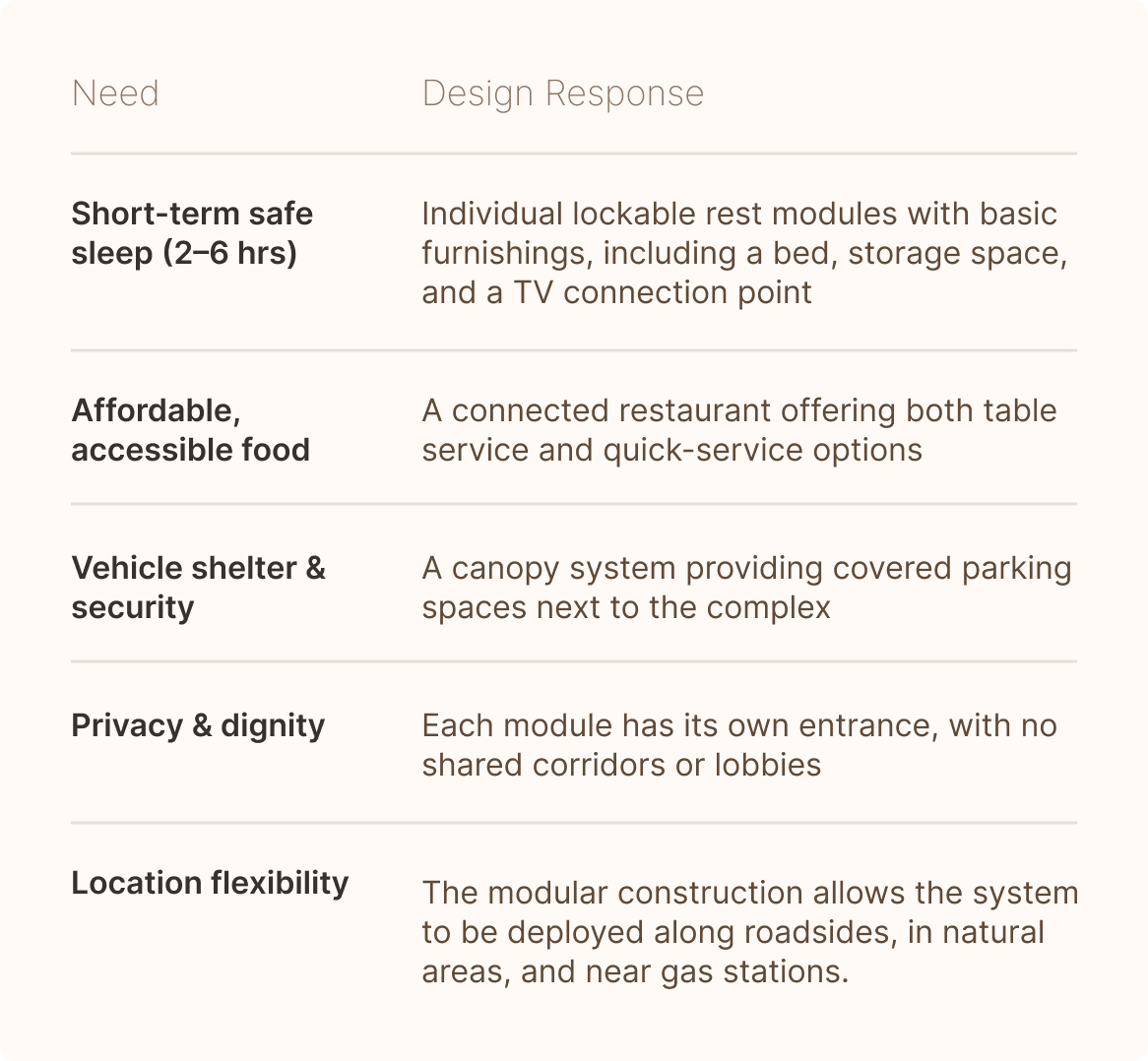
The design brief began with identifying exactly what a road traveller needs during a mid-journey stop. Five core needs were defined, each mapped directly to a design response that became part of the complex programme.
03 — Design Concept
The complex is conceived as five interlocking systems, each independently resolved but designed to operate together. The module logic allows any site to receive a custom configuration — from a minimal two-unit rest stop to a full eight-unit complex — without requiring any redesign.
Four-unit configuration — aerial view showing modular row formation
04 — Rest Module Design
The rest module measures 8.21m × 4.4m and contains everything a traveller needs: a full-width sleeping area with a real bed (not bunks or capsules), a compact bathroom with shower, a storage zone, and a TV point. The entrance is private — no shared lobby, no shared corridor.
The sloped mono-pitch roof (from 2.5m at the entrance facade to a continuous run) reduces material, sheds rainwater effectively, and creates the distinctive cascading roofline visible in the row elevation.

Rest module — floor plan (8.21 × 4.4m)

Single unit — front elevation with dimensions

Four-unit row — front elevation showing repeating module rhythm

Stacked floor plan layout — showing how four modules align in site configuration
05 — Restaurant Design
The restaurant sits at the centre of the complex and operates as the social anchor. At 8 × 4.6m footprint and 4.5m height, it reads as the tallest volume on site — naturally marking the entrance to the complex from the road.
Inside, the layout accommodates round table seating (Ø 3.5m feature table and Ø 0.75m individual tables) alongside a 0.86m service bar. Two distinct entrance doors allow separate flows for eat-in dining and quick service.

Restaurant floor plan — full seating layout

Restaurant — front elevation (4.6m wide)

Restaurant — side elevation

Restaurant — rear elevation

Full complex elevation — restaurant centre volume + flanking rest modules
06 — Façade & Material Strategy
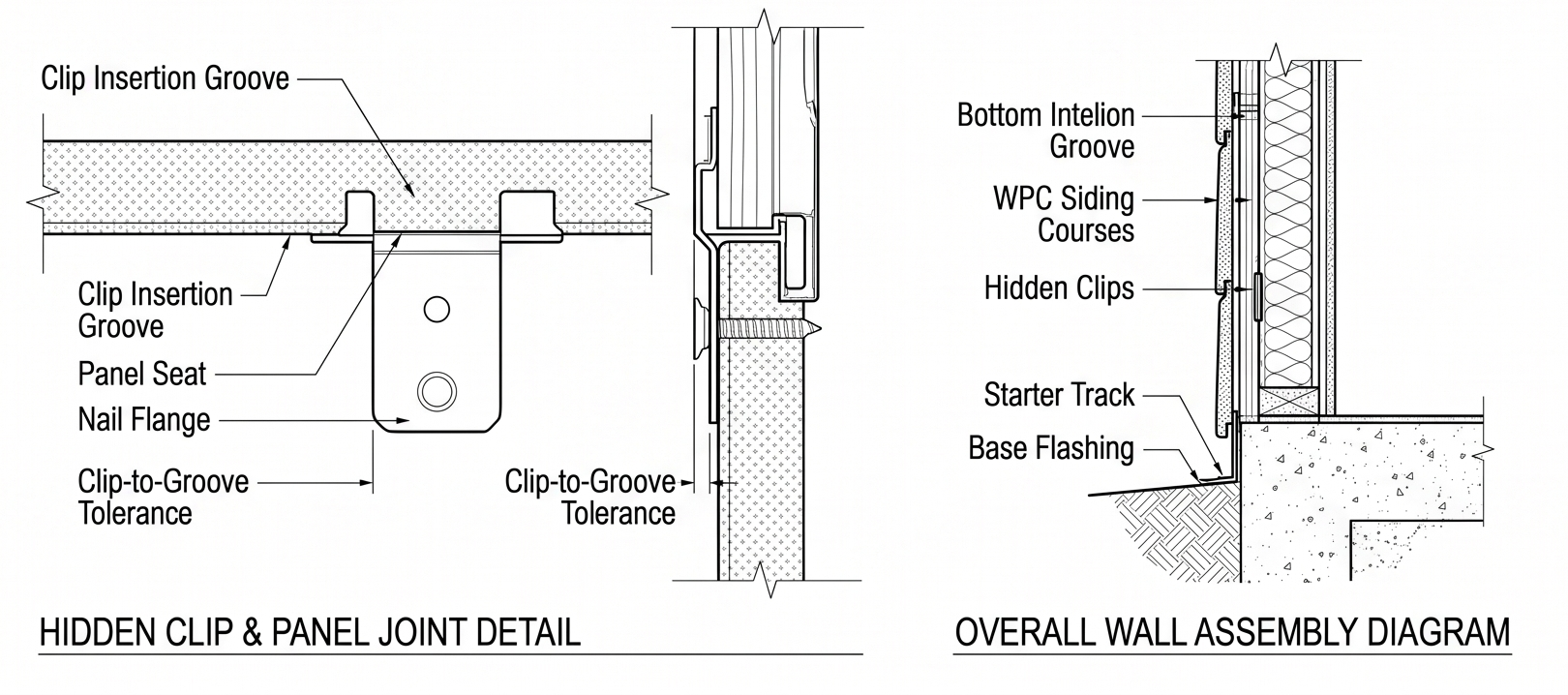
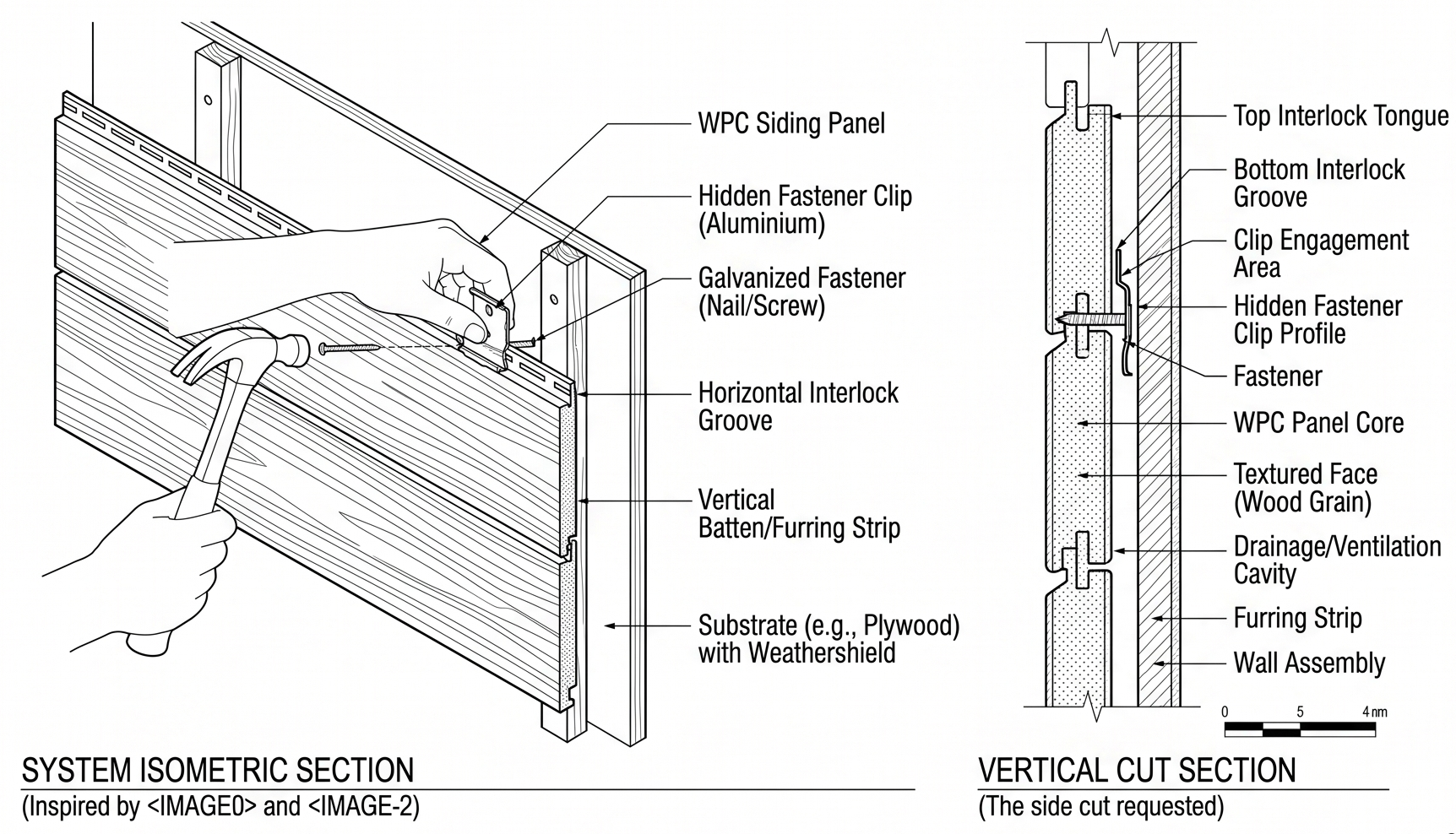
The exterior cladding is a WPC (Wood-Plastic Composite) horizontal lapped siding — a material that closely resembles natural timber grain while offering the dimensional stability, moisture resistance, and UV durability needed for exposed roadside sites across Iran's extreme climate zones.
A concealed-fastener system allows clean, nail-free faces across all elevations — a detail that raises the perceived quality of the building significantly above its construction cost. The two-tone palette (Cedar / Rustic Blend) is achieved entirely within a single material family.
The cladding is installed as a rain screen with a ventilated air cavity. Cool air enters at the base, is warmed by solar gain on the face, and exits at the top — reducing heat transfer and eliminating moisture trapping.
WPC system — isometric section and vertical cut detail
07 — 3D Spatial Model
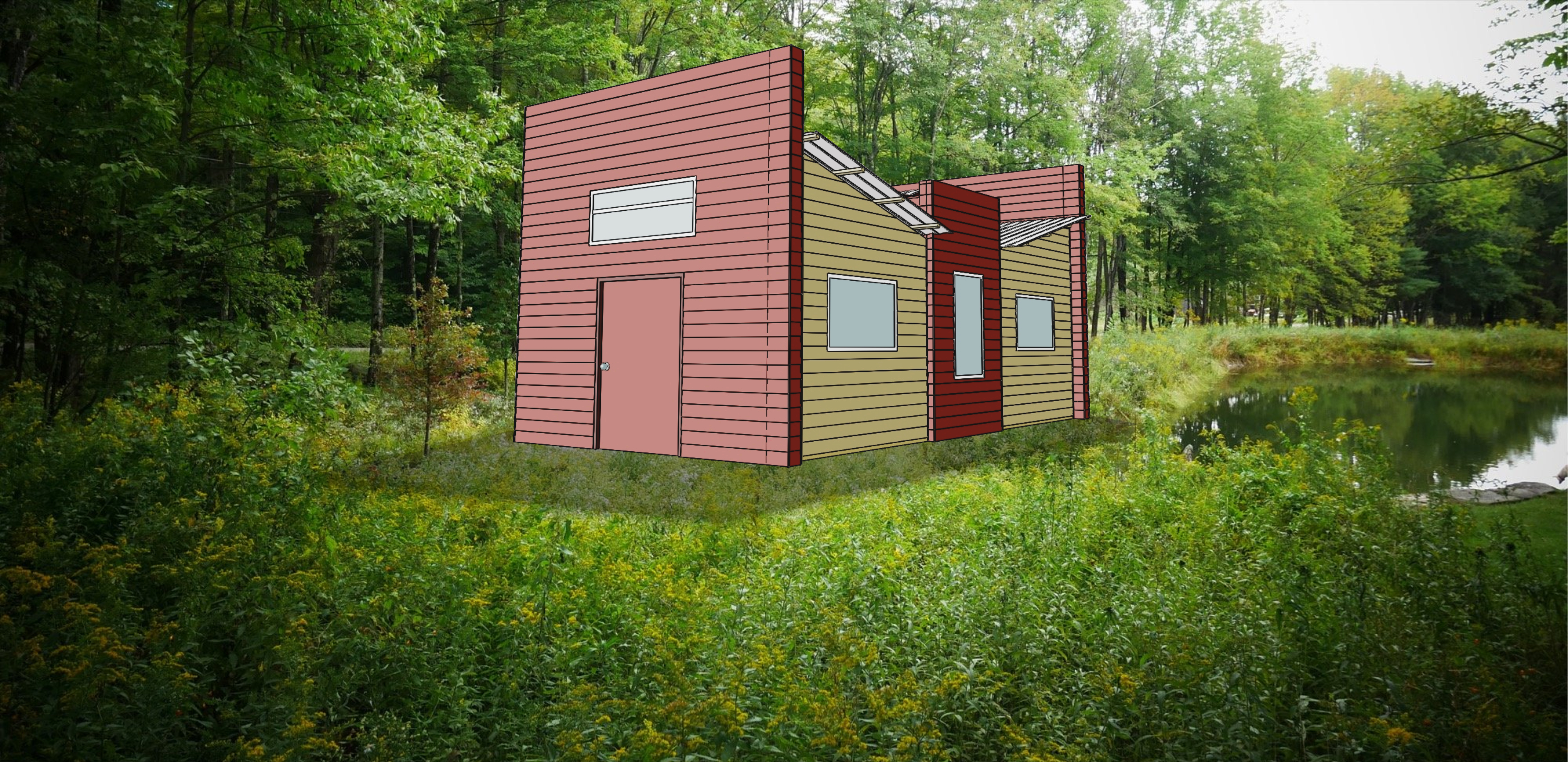
The 3D massing models show the complex deployed across three distinct landscape contexts: arid desert, temperate green terrain, and natural waterside settings. The modular system adapts visually to each without any change to the building form — only the site conditions change.
The two-tone WPC cladding creates a visual rhythm across the connected volumes. The taller restaurant reads as the anchor; the lower sloping-roof rest modules extend to either side; the canopy panels link the whole ensemble along the road-facing elevation.
Aerial view — arid desert context
Aerial view — green landscape context
Street-level view — desert roadside setting
08 — Role & Collaboration
This project is unusual in an industrial designer's portfolio — it operates at architectural scale. But the approach was fundamentally industrial: defining the user, identifying the system, designing the module, specifying the material, and iterating through dimensions until proportions, costs, and functional requirements were all satisfied simultaneously.
All room dimensions, window positions, furniture layouts, and module configurations were developed independently. The civil engineering team at Syeh Sazane Mehr Gostar provided structural feasibility review and construction method consultation — but the design intelligence, spatial logic, and material specification originated with and were led by the designer.
09 — Outcome & Reflection
The Roadside Rest Complex demonstrates the capacity of industrial design thinking — system logic, user empathy, modular iteration, material intelligence — to address problems conventionally left to architecture or civil engineering alone.
The concept established a typology that did not previously exist in the Iranian road infrastructure context: a dignified, affordable, modular rest stop deployable flexibly across diverse terrain and climate conditions, serving a segment of the travelling population that had been consistently underserved.