Work / Urban Heritage Interaction System
UI/UX Design
Shahr Farang

Urban Heritage Interaction System

A digital information system designed to introduce visitors to the historic fabric of District 12 in Tehran, taking its name and interaction model from the traditional Shahr Farang devices once common in old Tehran.

RoleTeam Project, UX & Concept Design
Team4 Designers
RecognitionTop 20, Dayrehkhalagh Urban Design Award
Year2016
Shahr Farang kiosk and mobile app showing a district story map
Context

Rich stories, hard to access

Historic districts often hold rich cultural stories, but this information is not always easy for visitors to access in an engaging way. In many cases, information is limited to static signs or scattered sources, which makes it difficult for people to understand the historical context of a place while moving through the city. At the same time, many public spaces lack interactive elements that invite people to pause, explore, and connect with their surroundings.

Design Approach & System Concept

A connected system, not an isolated object

The project was developed through a design thinking process that explored how digital interaction could support people's experience of a historic district. The team looked at how visitors experience these areas, paying attention to moments when people try to find their way, pause, or discover something new. Instead of designing an isolated object, the goal was to create a system that supports both navigation and storytelling.

The proposal is based on a connected experience that spreads discovery across a public touchpoint and a personal one. Rather than concentrating information at a single point, a public information kiosk introduces the system and hands the experience to a companion mobile app, so visitors can carry the story of the district with them as they walk.
Interaction Journey

From kiosk to pocket

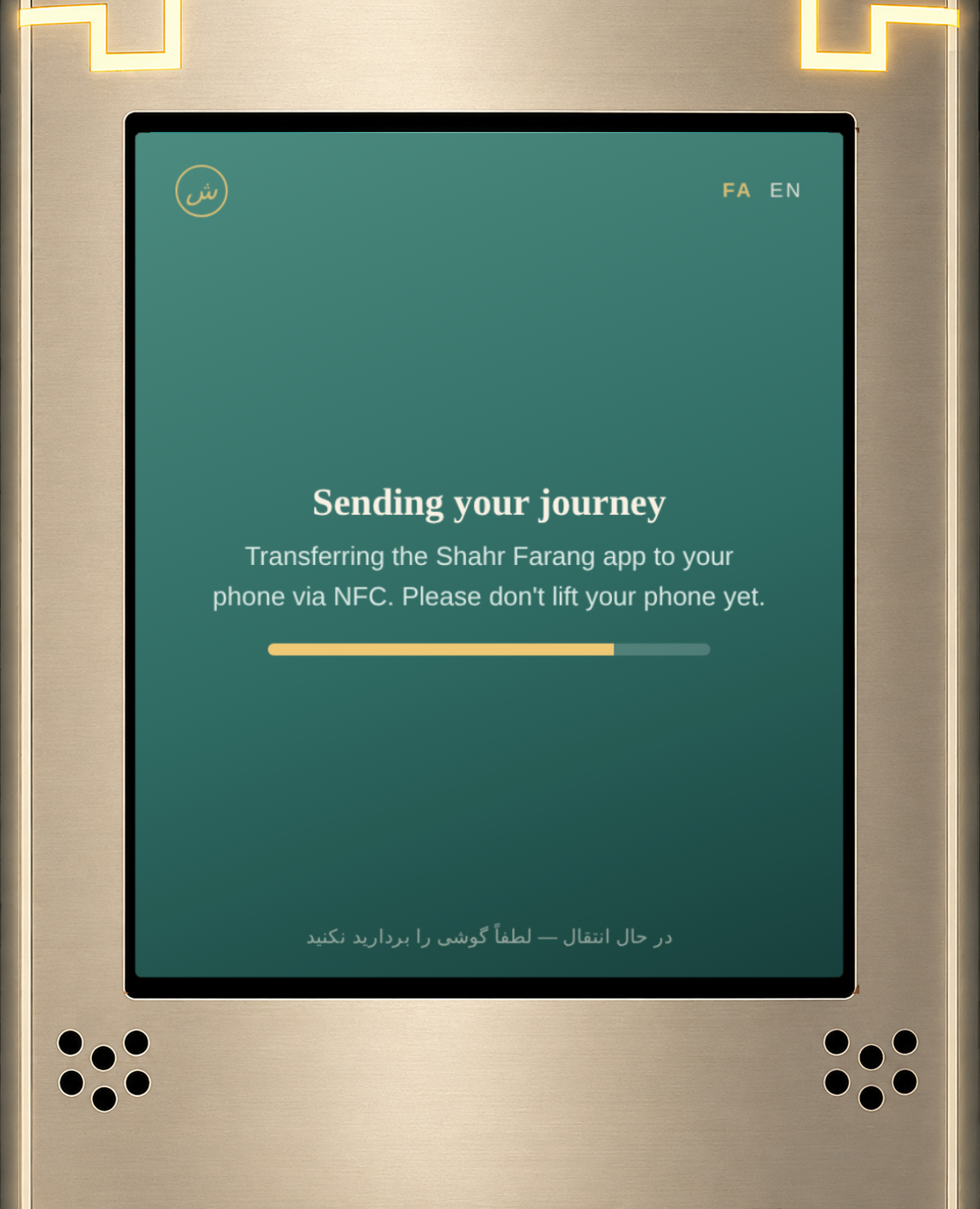
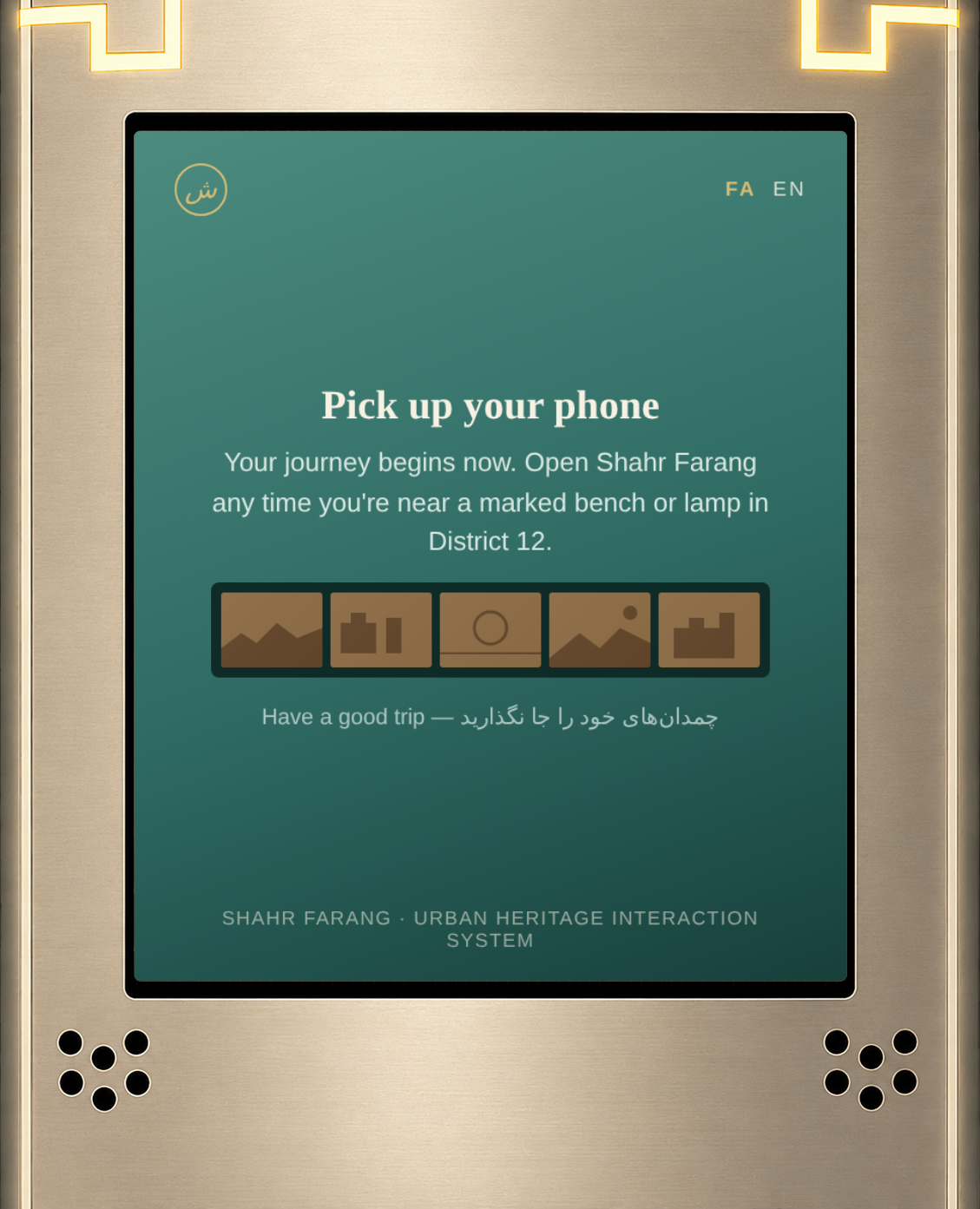
The experience begins when visitors encounter the Shahr Farang kiosk in the city or at a metro station. Through NFC technology, the app is transferred directly to the visitor's phone, and from there they explore stories and locations within the historic district as they walk.

1

Encounter the kiosk

Visitors find the Shahr Farang stand at a metro station or public space within the district.

2

Pay and place phone

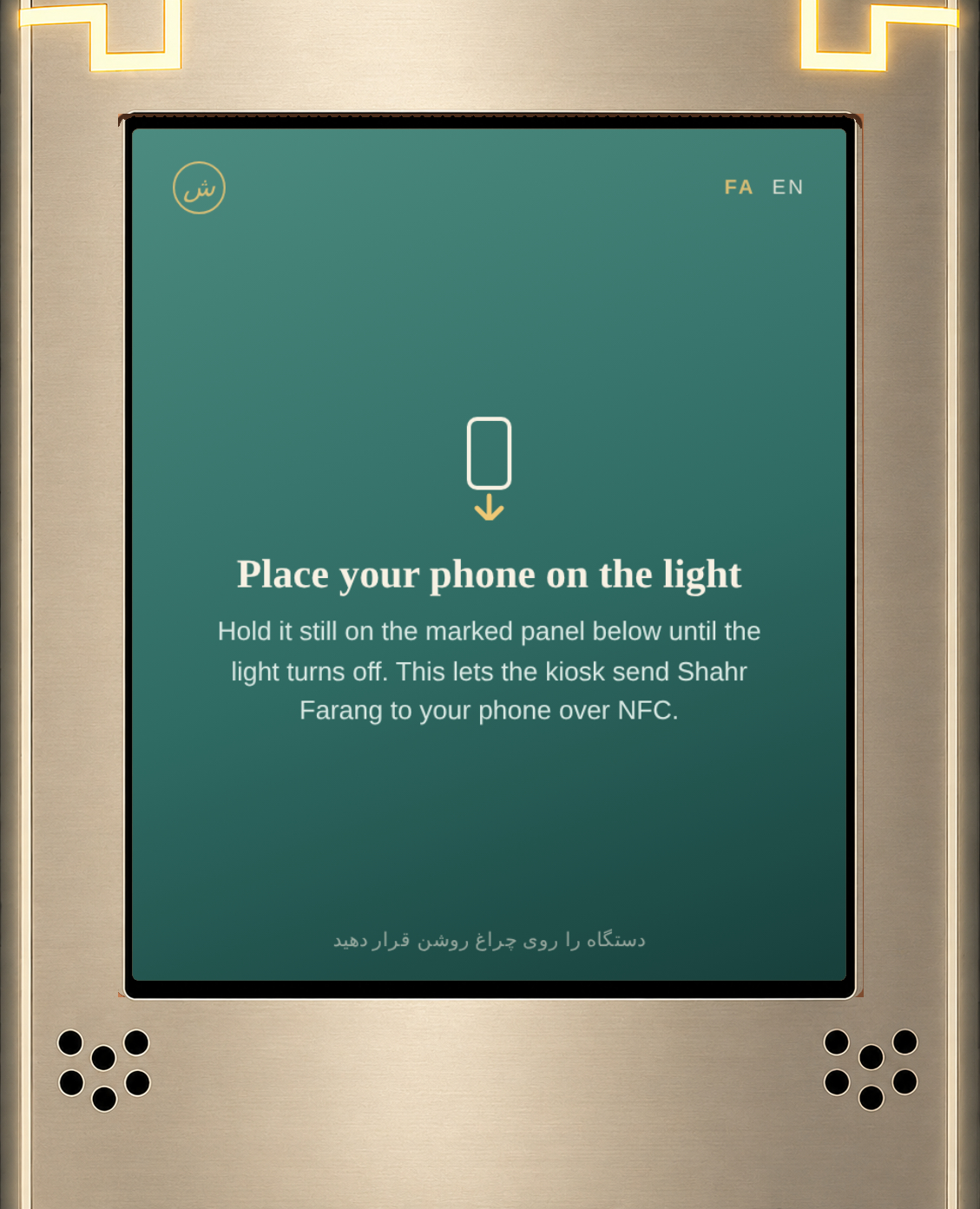
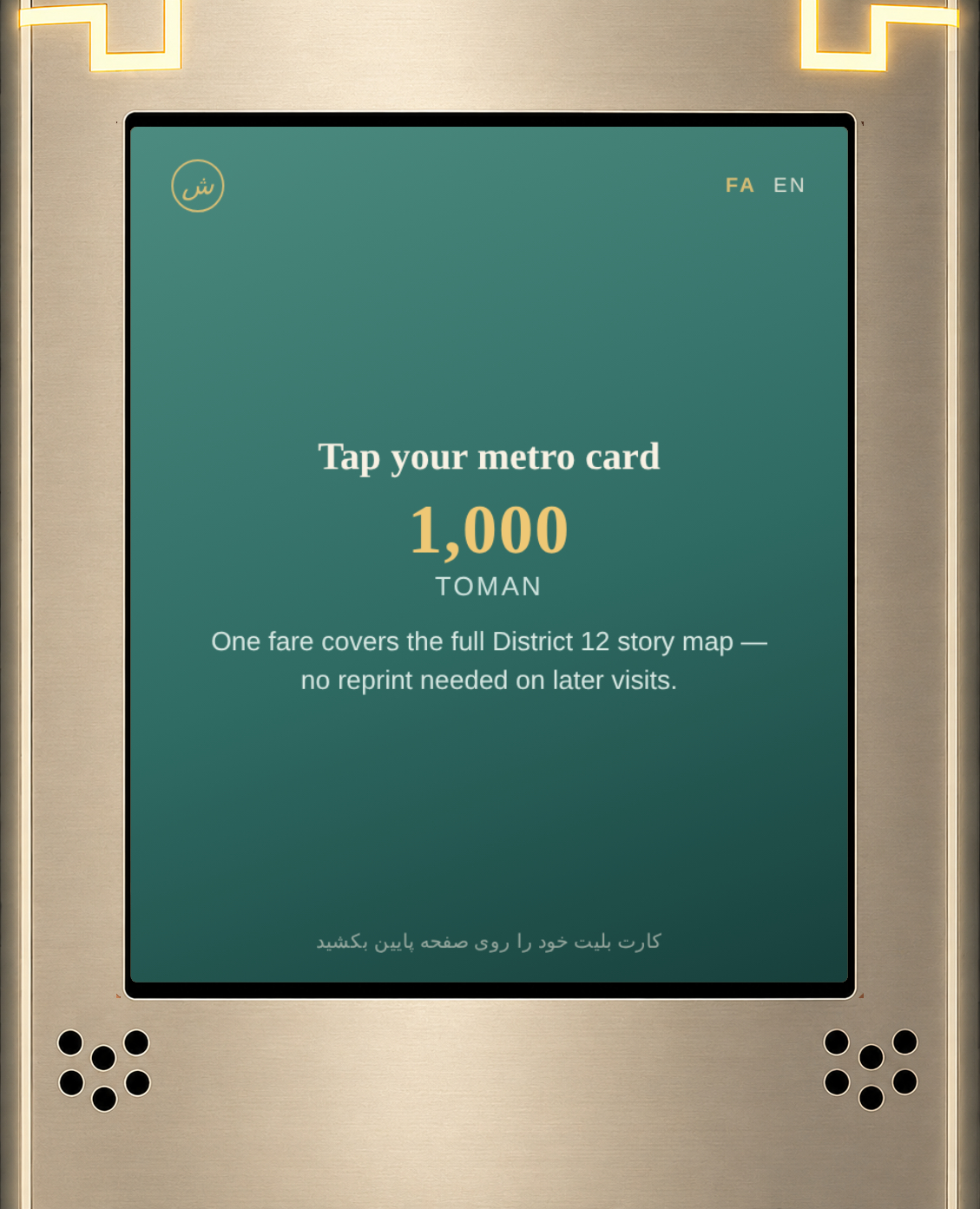
A small fee is paid with a public transportation card, then the phone is placed on the marked panel.

3

Receive the app via NFC

The Shahr Farang app transfers directly to the phone, ready to use immediately.

4

Explore on foot

The app guides visitors through nearby stories, photographs, and places as they walk the district.

Digital Layer, the Kiosk

A public access point

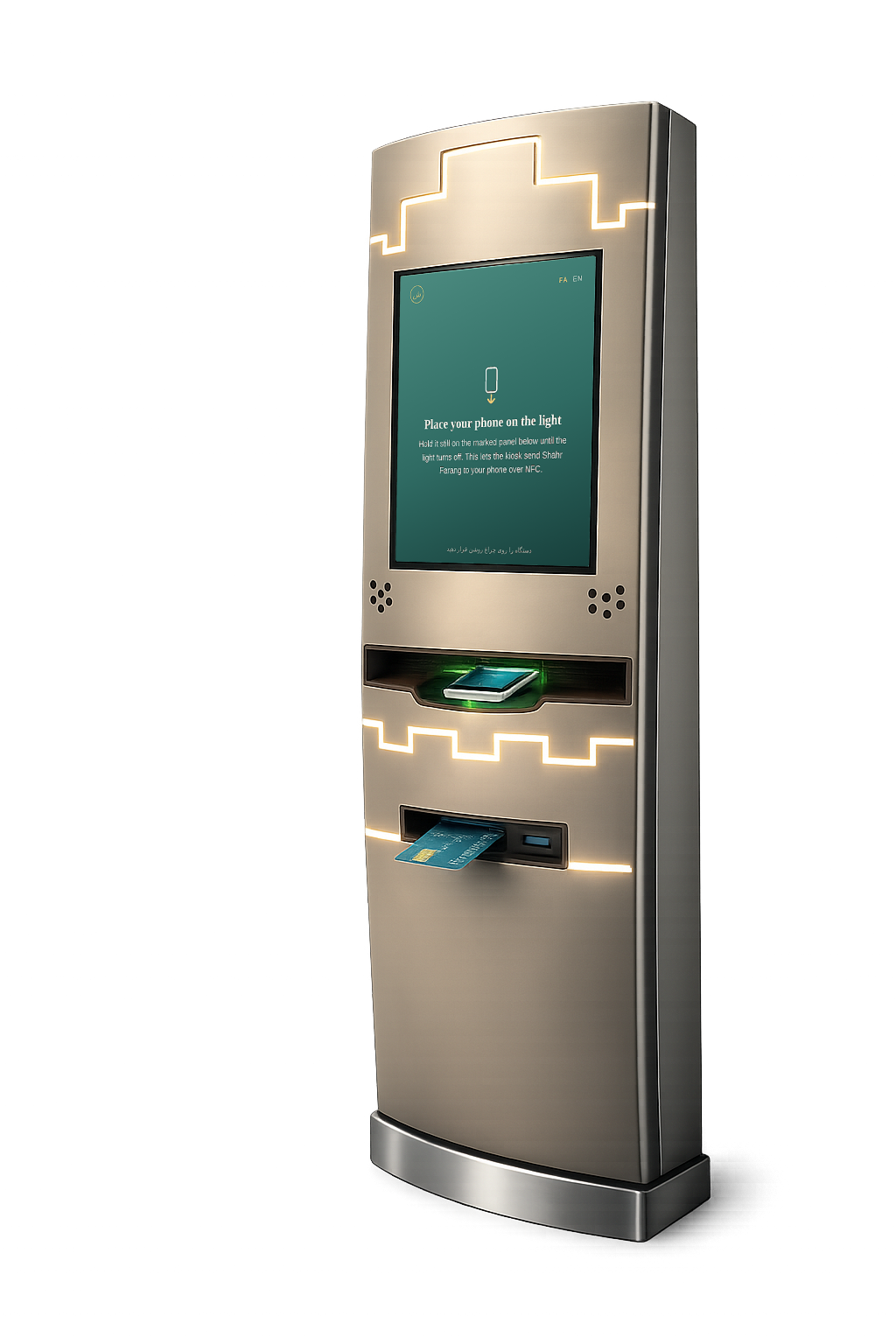
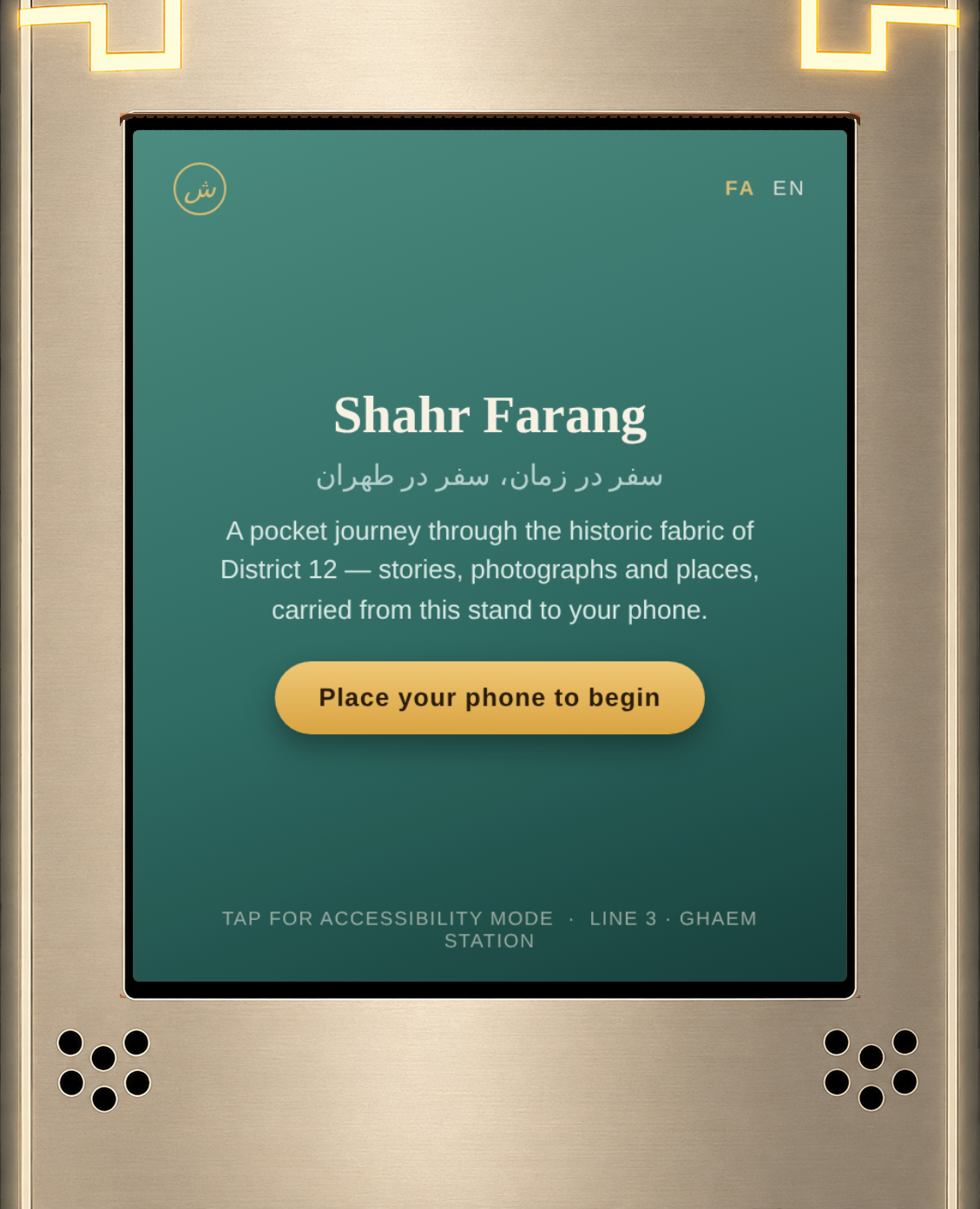
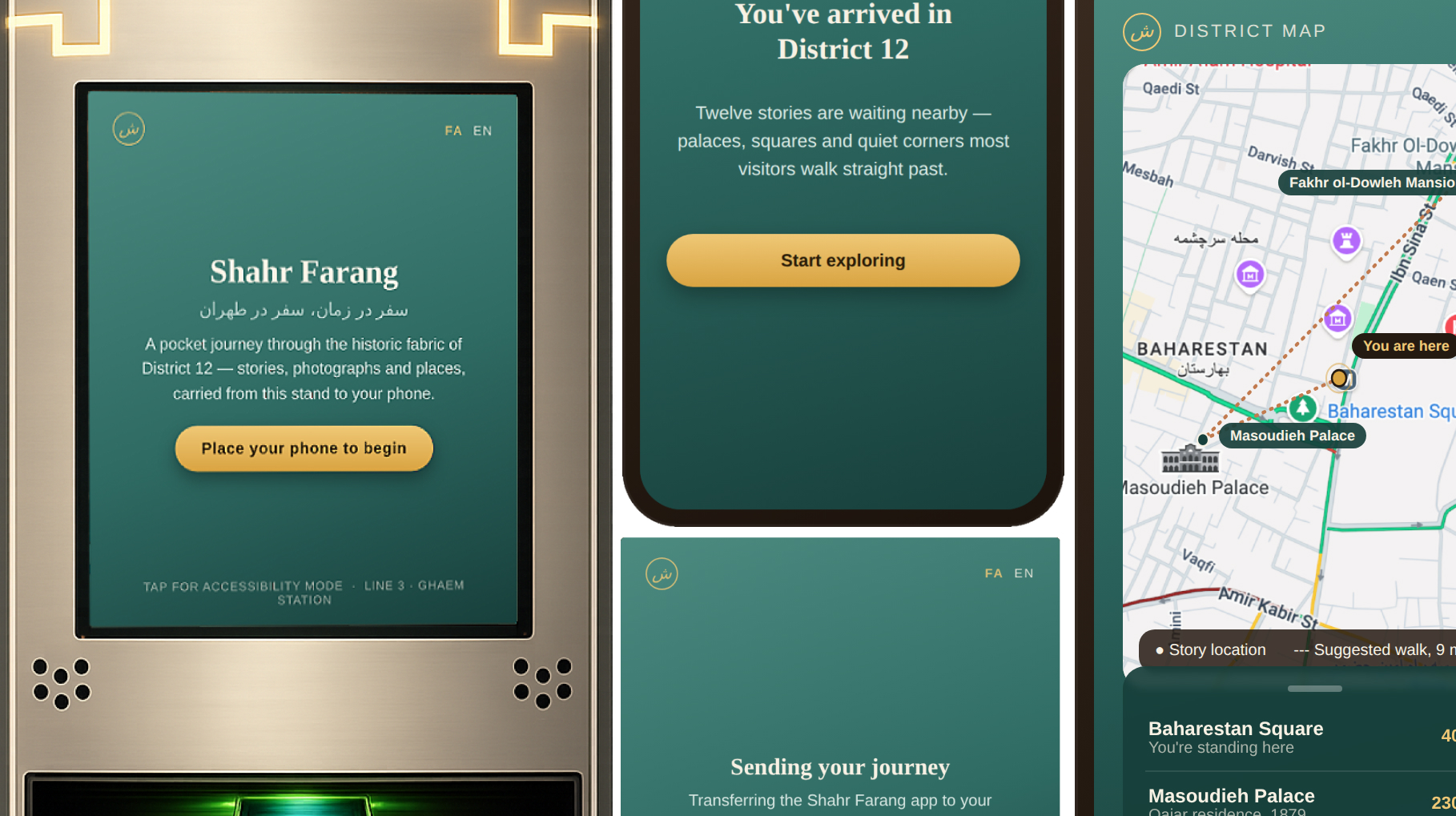
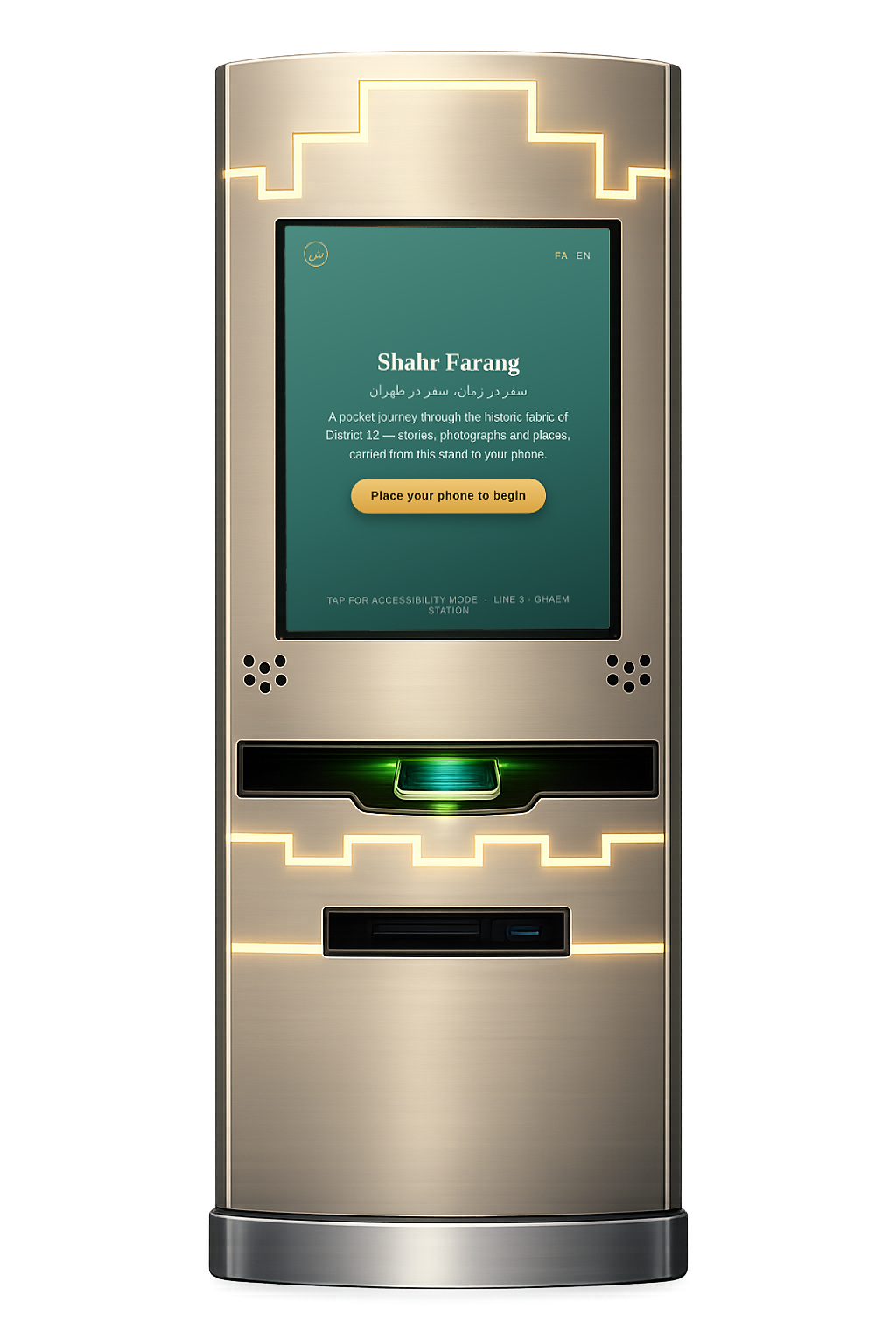
An interactive information kiosk works as the public access point for the system. Its form references motifs found in the historical context of District 12, and its interface is designed to be simple and intuitive, guiding a visitor through payment and NFC transfer in a few clear steps.

Shahr Farang kiosk, front view, showing the welcome screen
Kiosk, front view
Shahr Farang kiosk, angled view, showing the place-your-phone screen
Kiosk, angled view
Shahr Farang kiosk in a metro station setting, with district map on phone
Kiosk, in context
Kiosk screen, Shahr Farang welcome splash
1, Welcome
Kiosk screen, place your phone on the light
2, Place phone
Kiosk screen, tap your metro card, 1000 toman
3, Tap card
Kiosk screen, sending your journey via NFC
4, Sending
Kiosk screen, pick up your phone, journey begins
5, Pick up
Digital Layer, the App

Carrying the story on foot

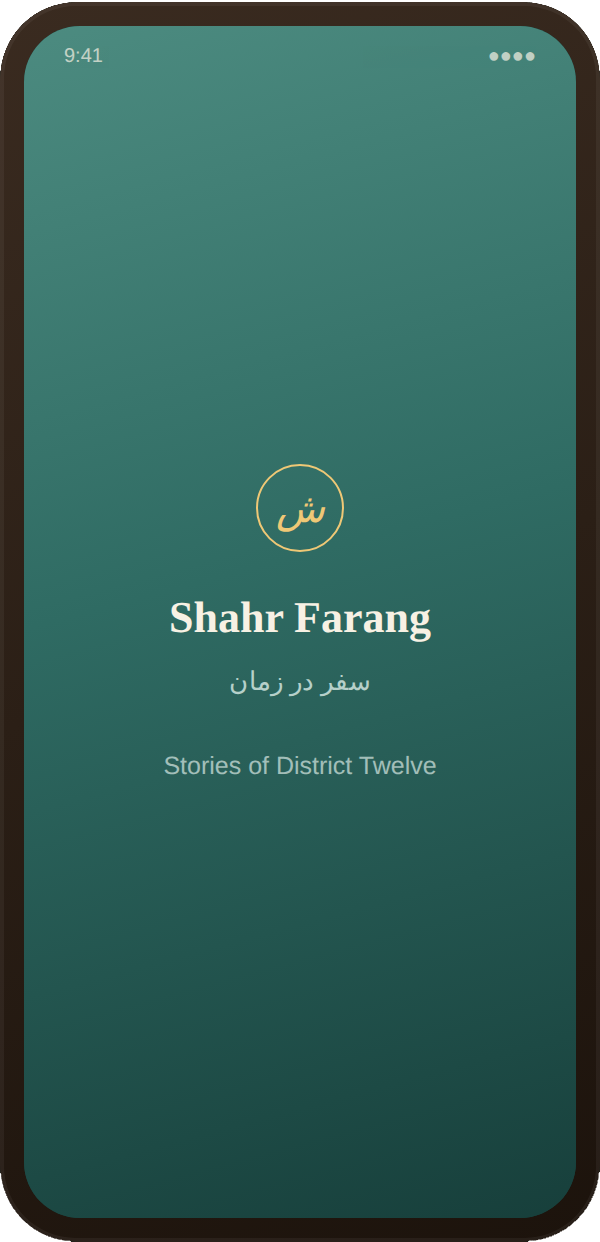
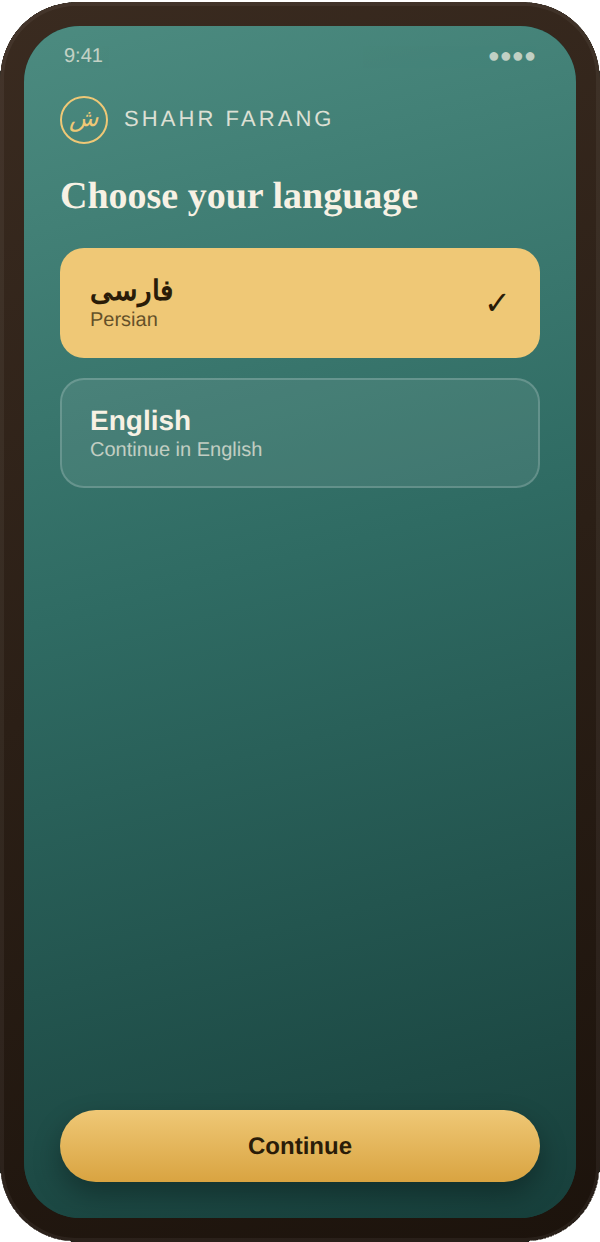
In addition to the kiosk, the mobile app allows the experience to continue beyond one location. By linking digital content to physical places, visitors can discover historical stories, compare archival and present-day photographs, and track their progress as they move through different parts of the district.

App screen, Shahr Farang splash, stories of District Twelve
1, Splash
App screen, choose your language, Persian or English
2, Choose language
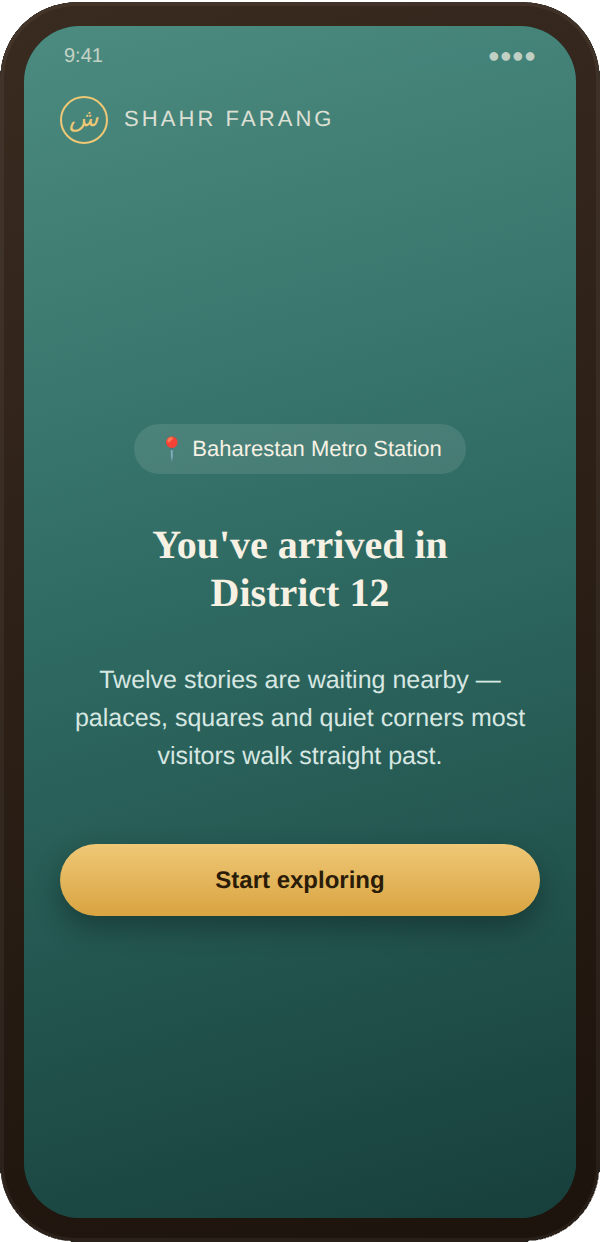
App screen, you've arrived in District 12, start exploring
3, Arrival
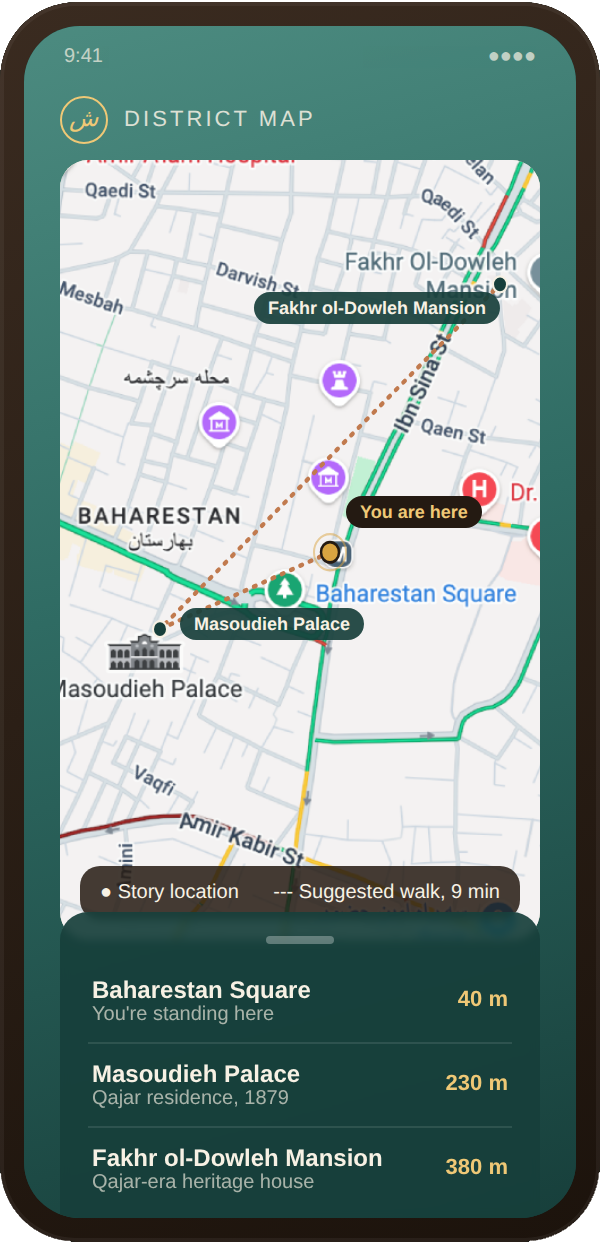
App screen, district map showing nearby story locations
4, District map
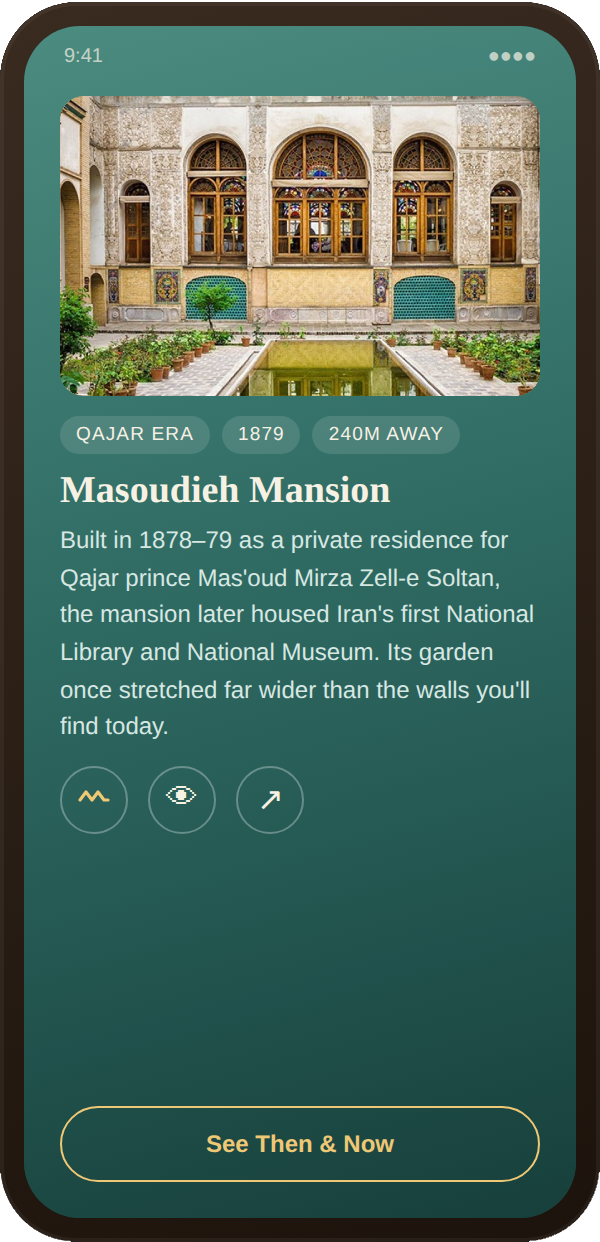
App screen, Masoudieh Mansion story card with history and distance
5, Story card
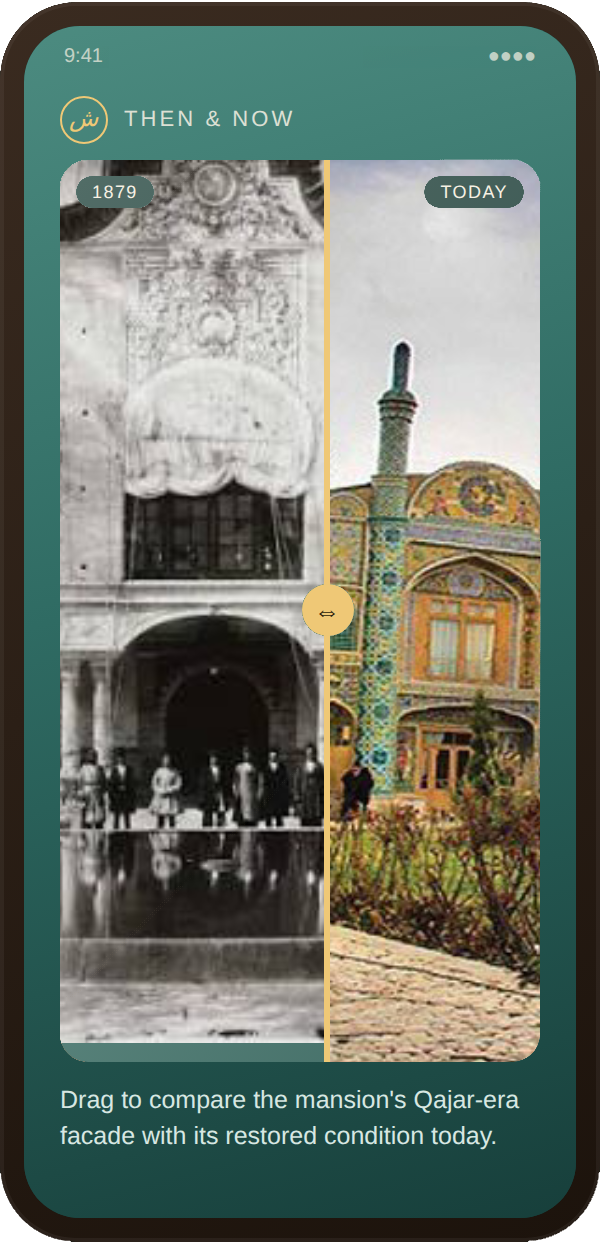
App screen, then and now, comparing the mansion facade across time
6, Then & now
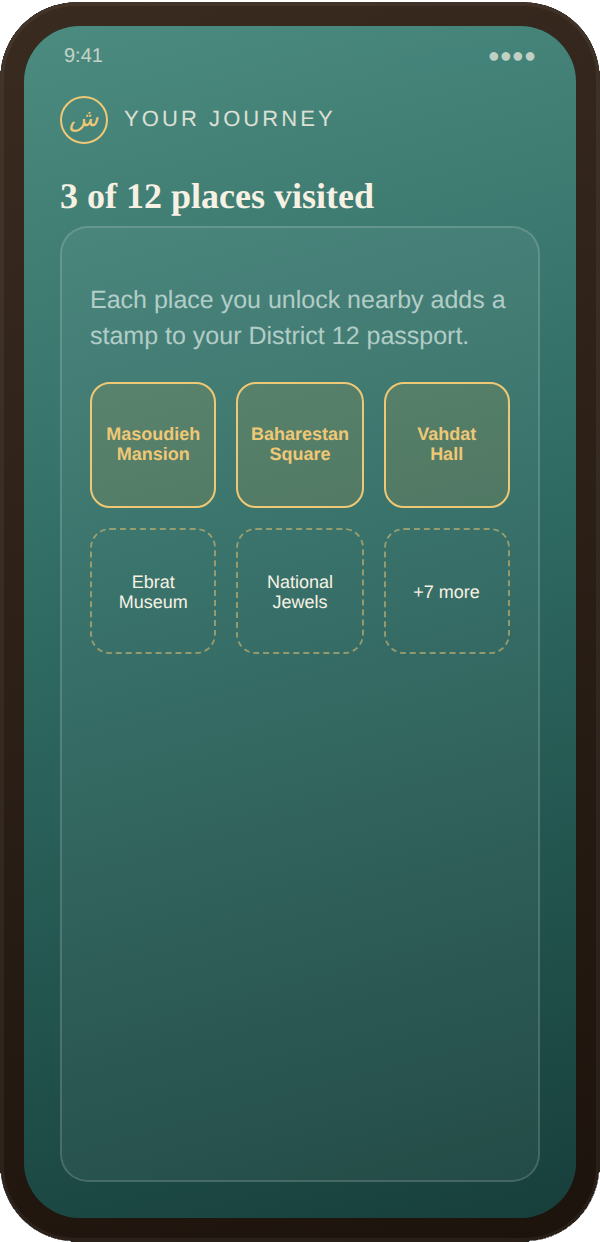
App screen, your journey, 3 of 12 places visited, district passport
7, Your journey
Recognition

Selected among the Top 20 proposals

Dayrehkhalagh Urban Design Award, 2016

Selected among the Top 20 proposals at the 2nd National Street Furniture Design Festival, organized by the Tehran Beautification Organization.

Tehran Experience Seminar, Certificate of Attendance

16-hour seminar, "Human, Public Spaces, and Urban Life Quality," held alongside the festival at Cinema Mellat Gallery Complex, Tehran.

Role & Authorship

A team project, four designers

Urban Heritage Interaction System was developed collaboratively by a team of four designers, Soraya Khavasi, Saba Saboursadeghzadeh, Coolan Zargami, and Mahsa Haghipanah, exploring how digital interaction could improve people's experience of historic city districts.

UX & Concept Design System Concept Interaction Journey Kiosk & App Interface
Design Outcome

Design as a system

This project explores how digital interaction can support exploration and learning in public space. By connecting a public kiosk with a personal mobile app, the concept creates an experience where visitors can navigate the area, pause, and access historical information while moving through the city.

The project was also an early attempt to think about design as a system. Instead of creating an isolated object, the digital touchpoints were designed to work together and shape a shared experience, making the cultural and historical layers of the city easier for visitors to discover and understand.