Project Overview
Mardom-e No is Zanjan province's first private regional daily — a broadsheet covering local politics, economics, culture, and social affairs for a general audience. The role covered the full editorial design and pre-press pipeline: daily layout from raw content to print-ready files, managing both full-colour issues and hybrid colour/B&W print workflows.
The work demanded speed, consistency, and editorial judgment — producing eight pages to press deadline every day, across four years and thousands of issues, while maintaining a coherent Persian typographic identity throughout.
Scope of Work
The role was not a single design project but an ongoing production responsibility — daily layout across every section of the paper, from breaking news front pages to weekly cultural features, interviews, and classified-heavy inside pages.
Front Pages
The front page sets the editorial register for each issue — lead headline scale, photo selection, and story hierarchy all resolved simultaneously to deadline. Full-colour print on the front, structured around the Mardom-e No masthead.
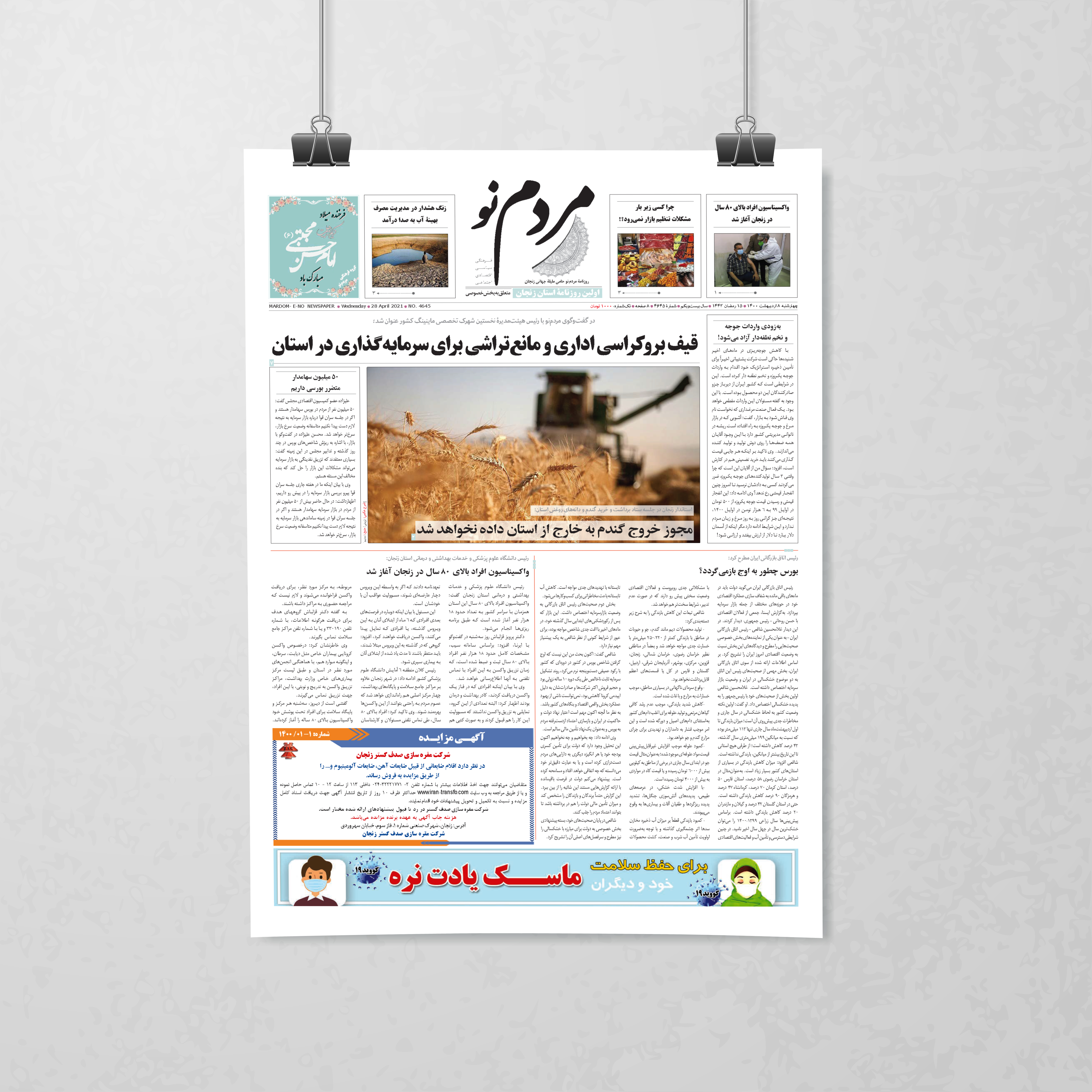
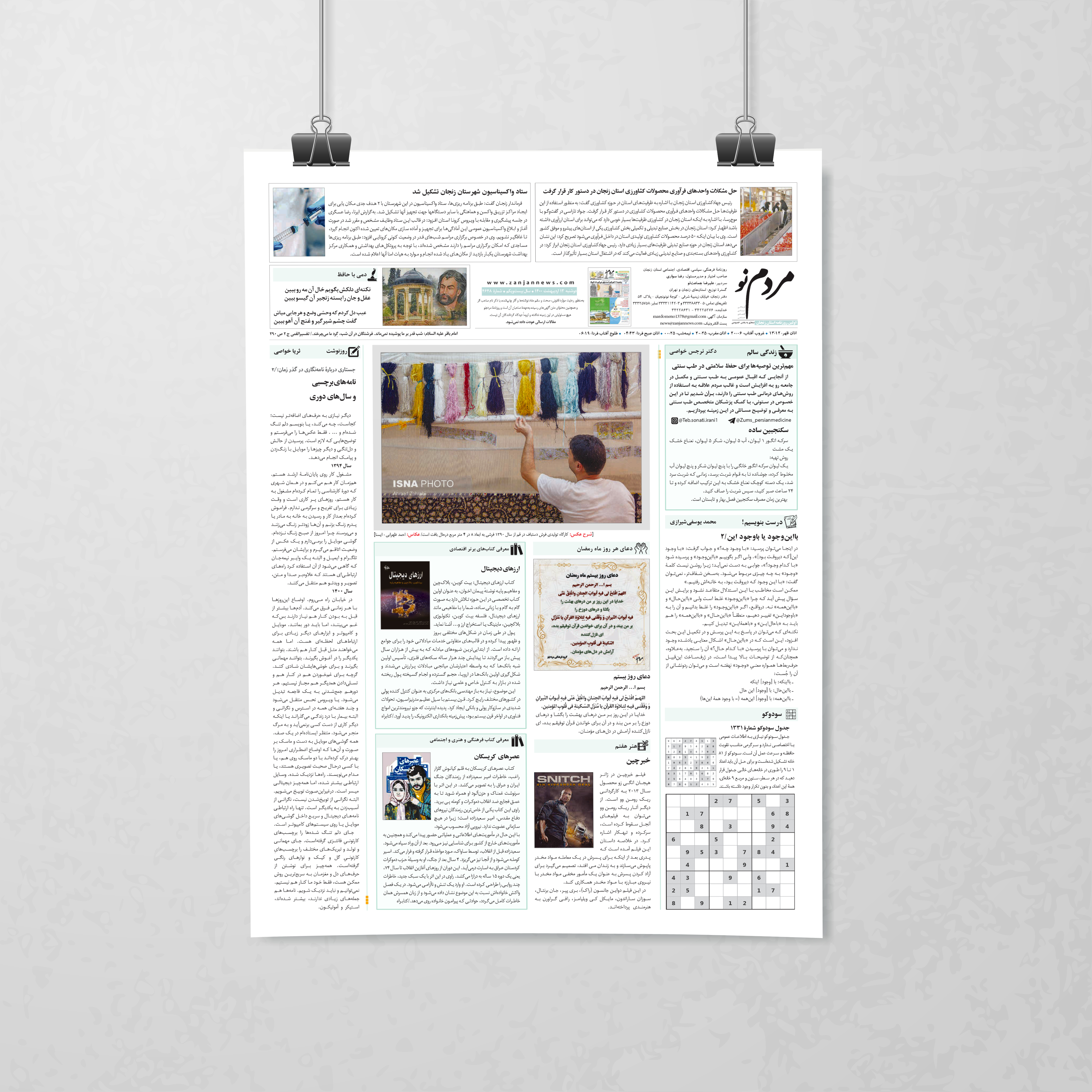
↑ Front pages — issues 4645 and 4668 · full-colour broadsheet · Mardom-e No
Cultural Spreads
The weekly culture and arts page (فرهنگ و هنر — Farhang va Honar) carried fiction, literary criticism, poetry, film reviews, and local arts coverage. The challenge was to give editorial depth to text-heavy content while integrating photography and illustration within a strict column grid.
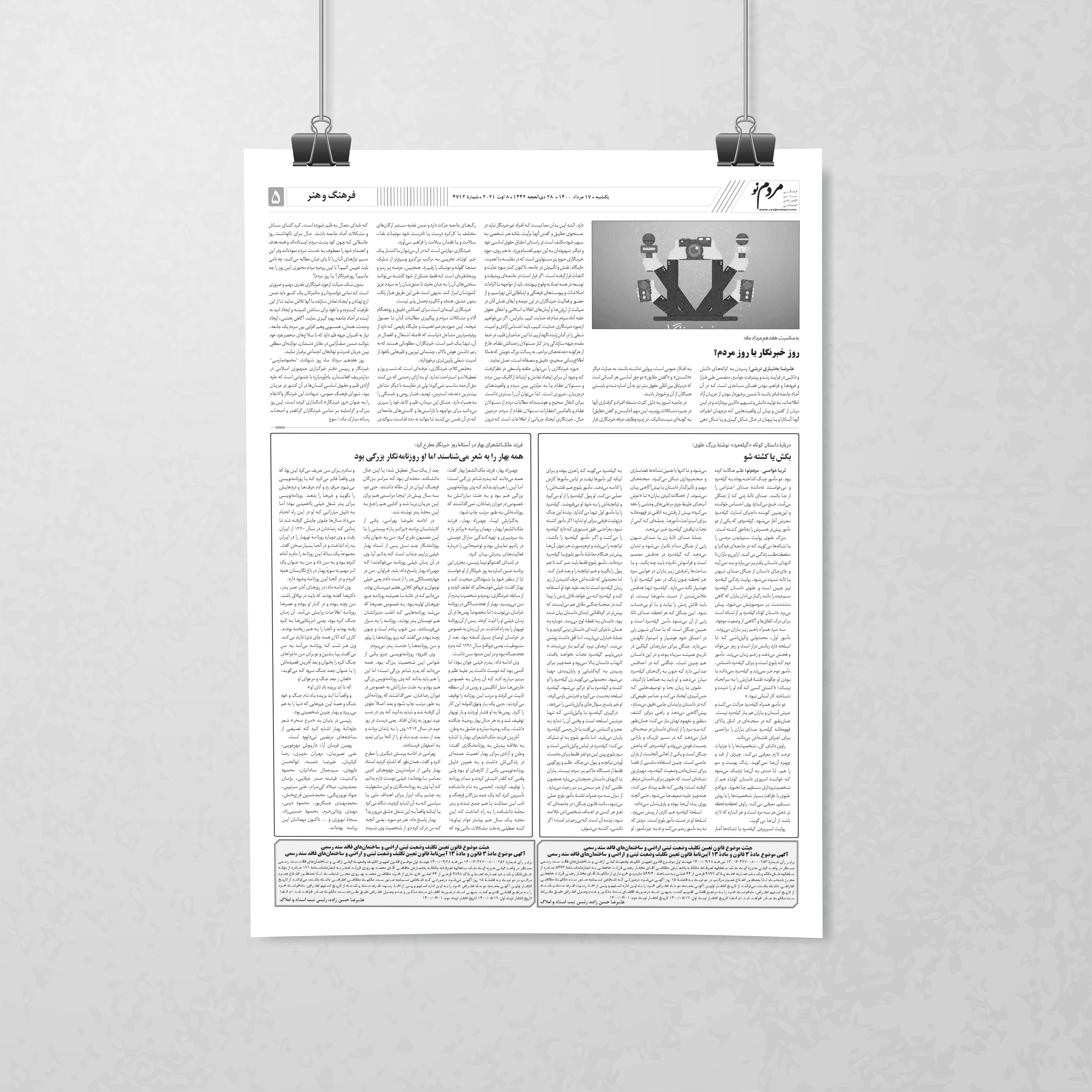
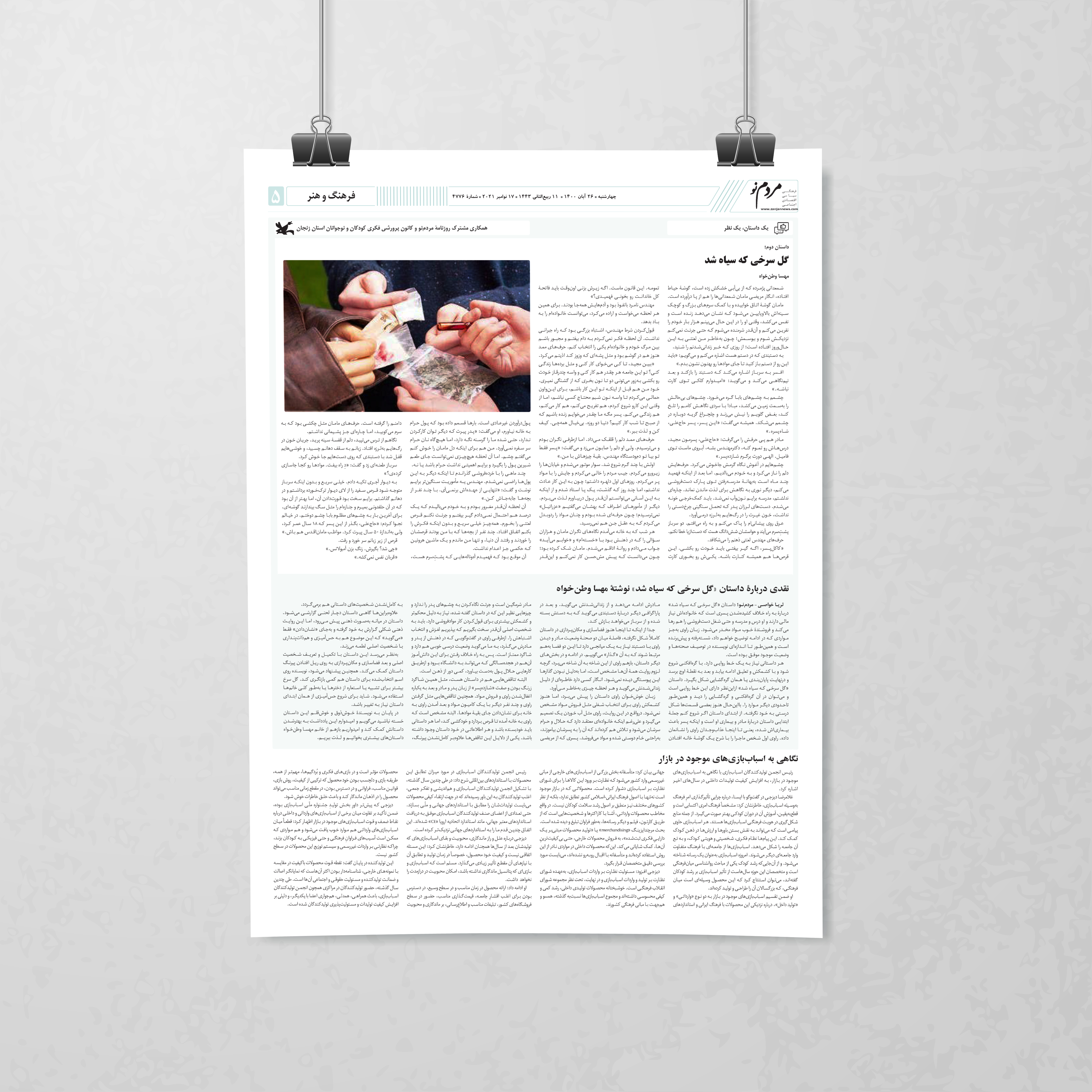
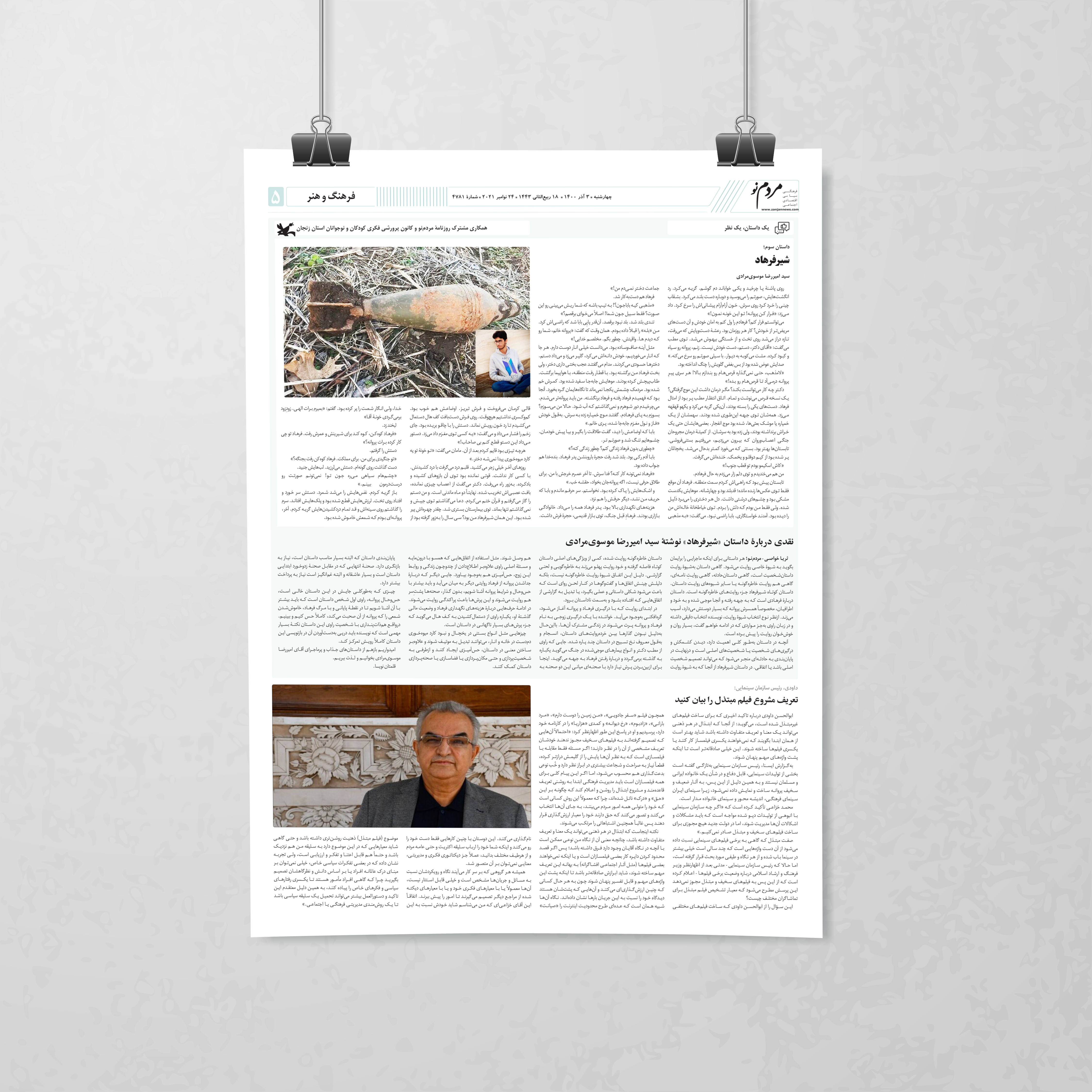
↑ Page 5 — Cultural spreads, issues 4712, 4776, 4781 · B&W print · Mardom-e No
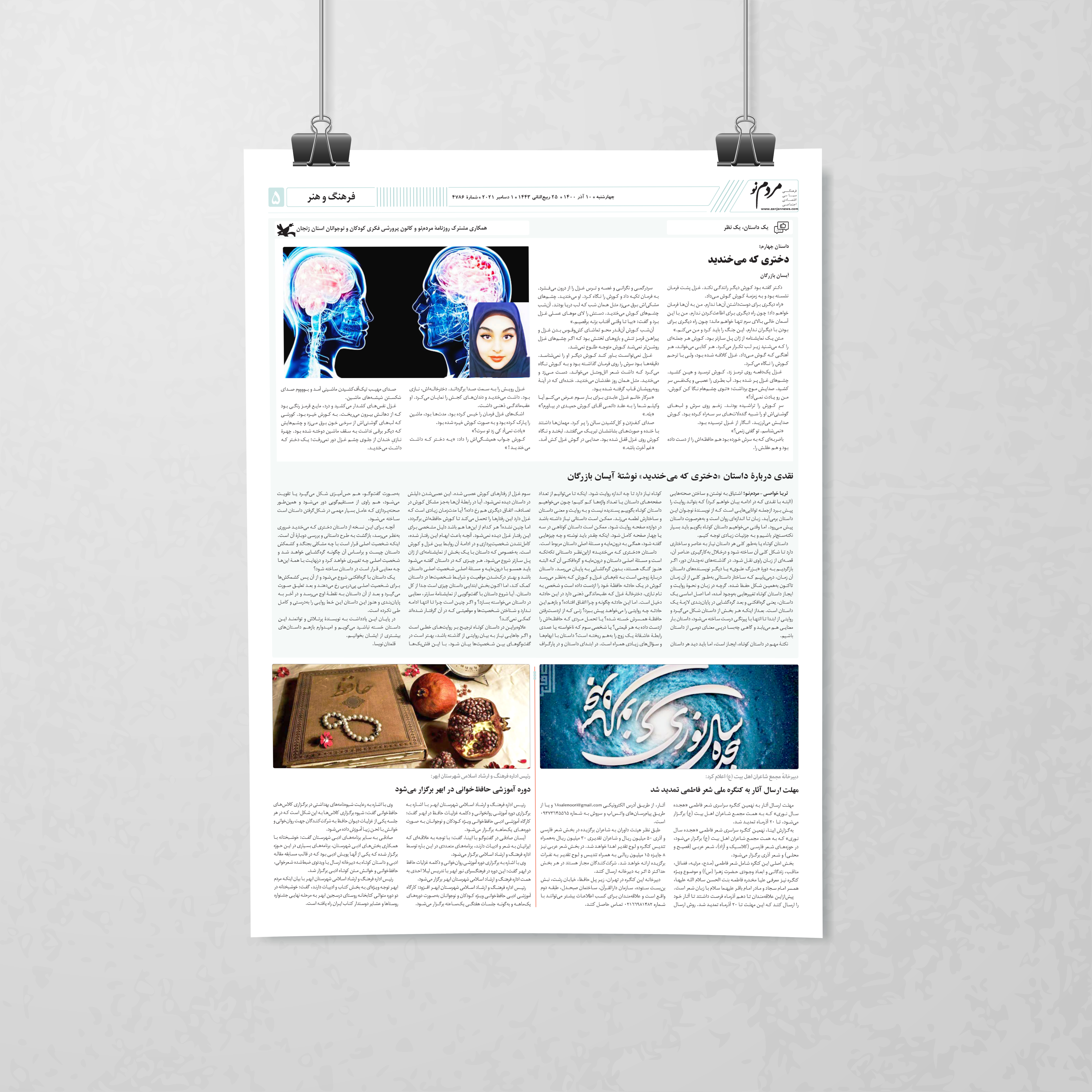
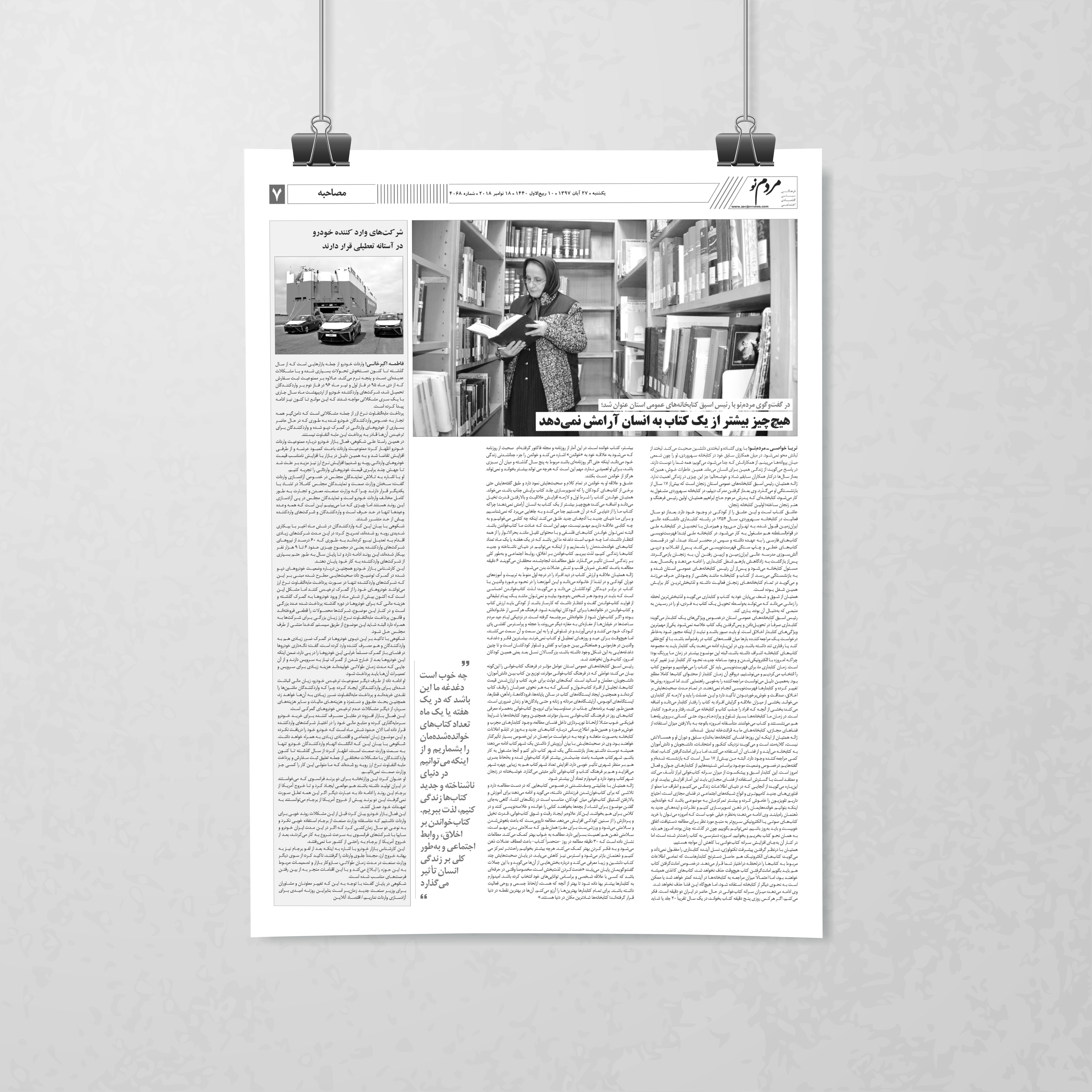
↑ Cultural page issue 4786 + interview feature page issue 4068 · Mardom-e No
Production Context
Regional daily newspaper production in Iran operates under specific constraints: right-to-left text flow, Arabic-script typeface systems, and print workflows that must balance full-colour front pages with lower-cost B&W interior sections. The pre-press process required CMYK-correct files for the cover and spot-colour or grayscale for interior pages — managed within the same daily production cycle.
Four years of daily production builds a different kind of design fluency than project-based work — the ability to solve layout problems quickly, hold a visual system under pressure, and make editorial decisions with incomplete information to an immovable deadline.